



Carrying excess weight doesn't just affect the number on the scale — it places a measurable, day-to-day burden on your joints, spine, and muscles, while also raising your risk for a wide range of chronic health conditions. Understanding this connection is the first step toward building a care plan that addresses the whole picture, not just isolated symptoms.
The Mechanical Load on Your Joints
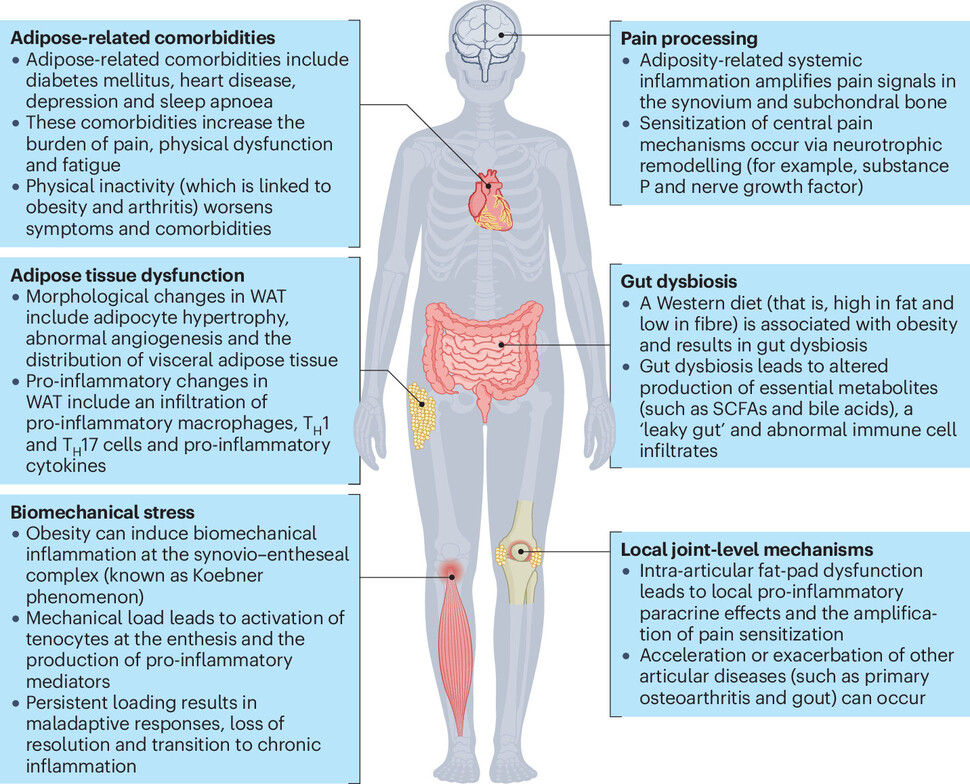
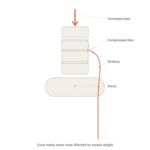
Every extra pound of body weight translates into additional force on weight-bearing joints — especially the knees, hips, and lower back — with every step you take. Over time, this added mechanical stress contributes to wear and tear on cartilage and joint structures.
Research backs this up clearly. <cite index="72-1">Weight loss has been shown to reduce knee-joint loads in overweight and obese adults with knee osteoarthritis, and can lead to clinically meaningful improvements in pain along with a slower progression of joint damage.</cite> The relationship goes beyond just the knees — <cite index="73-1">a systematic review found a strong association between obesity and musculoskeletal pain generally, with a particularly strong link to lower back pain.</cite>
It's Not Just About Mechanical Stress
While it's easy to assume joint pain in people carrying excess weight is purely a matter of extra load, the science tells a more complex story. <cite index="71-1">Adipose tissue itself acts as an active endocrine organ, producing inflammatory compounds that can impair cartilage integrity, alter bone remodeling, and contribute directly to chronic pain</cite> — separate from the simple mechanics of carrying more weight. This means metabolic and inflammatory factors work alongside mechanical stress to affect joint and spine health, which is part of why comprehensive obesity-related musculoskeletal disorders (including osteoarthritis, disc degeneration, and chronic back pain) are so common.
There's also a two-way relationship worth understanding: <cite index="71-1">musculoskeletal pain can limit physical activity, which in turn can contribute to further weight gain</cite> — a cycle that can be difficult to break without addressing both sides of the equation.
The Impact on Nerves
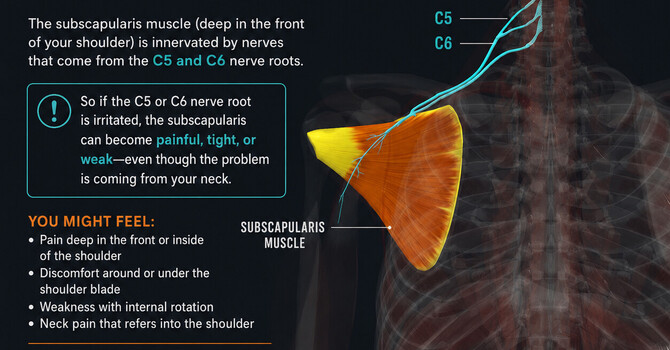
Joints and discs aren't the only structures affected by excess weight — nerves are too, and this connection is especially relevant for anyone dealing with sciatica, numbness, or nerve-related pain.
Nerve compression. Extra body weight adds mechanical pressure in the narrow spaces where nerves travel through the body. <cite index="87-1">Each additional pound of body weight imposes roughly four additional pounds of force on the joints and spine, which significantly raises the risk of nerve compression syndrome</cite> — a condition where a nerve becomes crushed or compacted at a specific point, leading to pain, numbness, and muscle weakness. <cite index="88-1">This can show up as carpal tunnel syndrome in the wrists, or as tarsal tunnel syndrome and meralgia paresthetica affecting the legs.</cite>
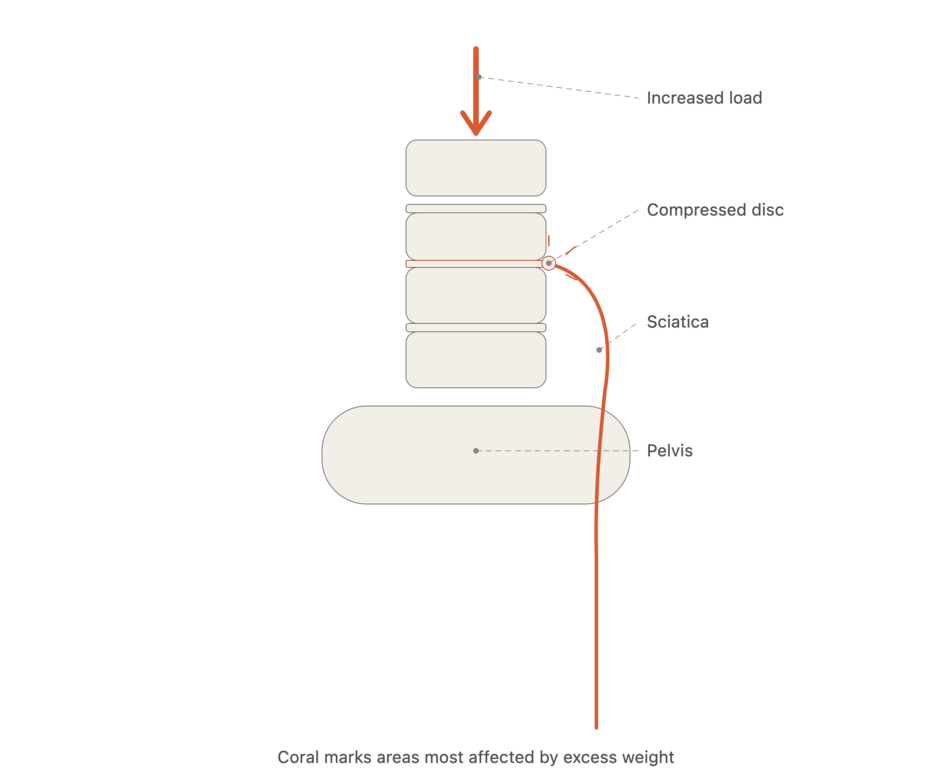
Sciatica. This is one of the clearest weight-related nerve connections, and one of the most common reasons people seek chiropractic care. <cite index="83-1">Excess weight puts added pressure on the spine that can trigger or worsen sciatica, and healing tends to take longer for people carrying additional weight.</cite> Inflammation plays a role here too — <cite index="80-1">the pro-inflammatory chemicals released by fat tissue can irritate the sciatic nerve further and intensify pain, contributing to symptoms that persist over time.</cite> Weight management remains important even after more invasive treatment, since <cite index="80-1">continued excess weight raises the risk of disc herniation recurring after surgery.</cite>
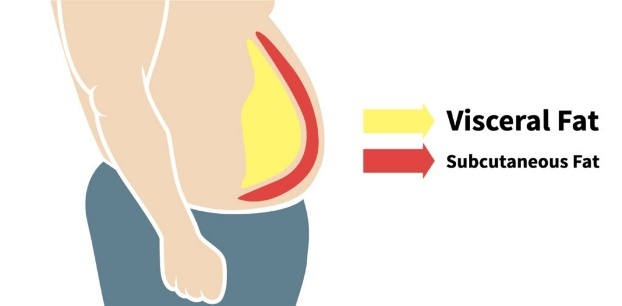
Peripheral neuropathy. Nerve damage causing numbness, tingling, or burning sensations — most often in the hands and feet — isn't limited to people with diabetes. <cite index="86-1">Research shows that people with obesity can develop neuropathy symptoms even without diabetes present, and central obesity in particular (fat concentrated around the waist) may play a significant role, with the distribution of body fat appearing to matter as much as overall weight.</cite>
Beyond the Joints: Broader Health Risks
Musculoskeletal strain is just one piece of a much larger picture. Excess weight is a well-established risk factor for a range of other health conditions, including:
- Type 2 diabetes and insulin resistance
- Cardiovascular disease, including high blood pressure and elevated cholesterol
- Sleep apnea and other breathing-related sleep disorders
- Metabolic syndrome, a cluster of conditions that raises the risk of heart disease and stroke
- Increased surgical risk, including <cite index="74-1">less favorable outcomes following joint replacement surgery in patients with a higher BMI compared to non-obese patients</cite>
Because these conditions often overlap and compound one another, addressing weight as part of an overall health strategy can have ripple effects well beyond joint comfort alone.
What the Research Shows About Weight Loss and Pain Relief
The encouraging news is that even modest, sustained weight loss can make a real difference. <cite index="78-1">Studies on weight loss following bariatric surgery found that reductions in BMI were associated with meaningful knee and back pain relief in a substantial portion of patients, along with reduced pain severity in other joints as well.</cite> While surgical weight loss represents one end of the spectrum, the underlying principle — that reducing excess weight reduces both mechanical load and inflammatory burden on the musculoskeletal system — applies across weight-loss approaches generally.
This is exactly why a comprehensive approach to musculoskeletal health should look at the whole patient, not just the joint or the spine in isolation. A treatment plan focused only on the site of pain, without addressing contributing factors like weight and metabolic health, may offer relief that's harder to sustain long-term.
A Whole-Patient Approach to Care
At Spine Align Chiropractic & Wellness, we believe lasting musculoskeletal and nerve health comes from looking at the full picture. That's part of why we've partnered with Altro Health to offer medically supervised weight management support — including GLP-1 therapy, lab testing, and hormone therapy — alongside our chiropractic and shockwave therapy services. For patients whose sciatica, nerve pain, or joint symptoms may be connected to excess weight, this gives you access to coordinated, physician-overseen care rather than piecing together separate providers on your own.
If you're dealing with joint pain, back pain, sciatica, nerve-related numbness or tingling, or other musculoskeletal concerns and have wondered whether weight may be playing a role, we're happy to talk through what a coordinated plan — chiropractic care alongside our medically supervised weight management program — could look like for you.
This article is for general informational purposes and is not a substitute for personalized medical advice. Please consult with a healthcare provider to discuss your individual health needs.

Jessica Walker, DC
Contact Me